
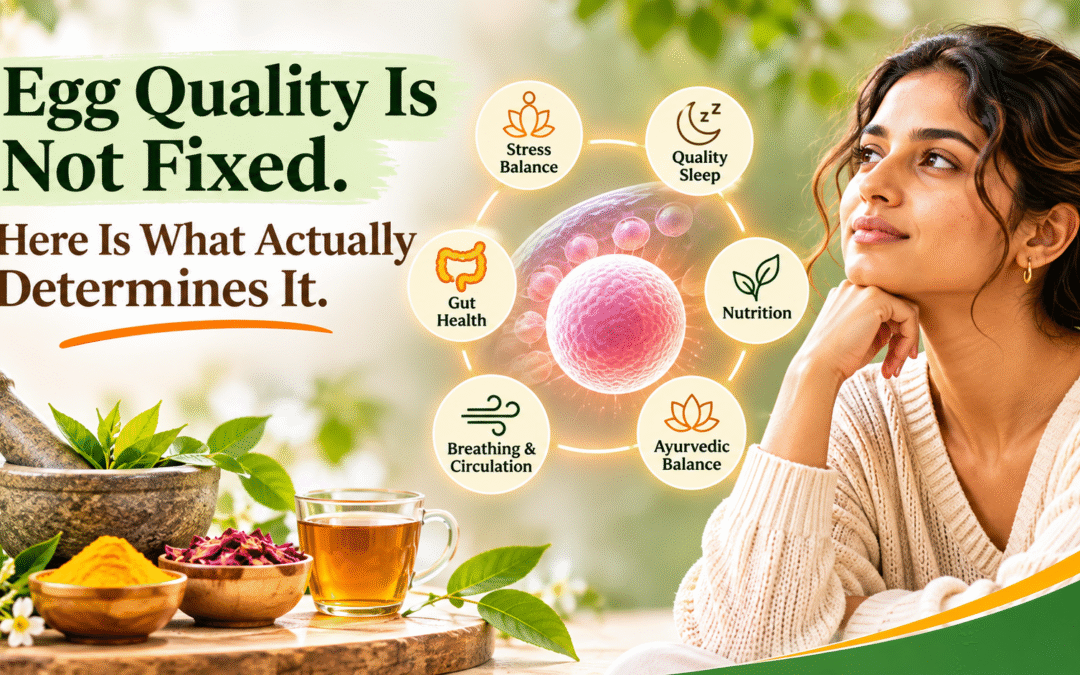
Poor egg quality. It is one of the most common reasons given for failed IVF cycles, failed implantation, and early miscarriage. And it is almost always delivered as a conclusion — as if egg quality is something that simply is, and cannot be changed.
I want to challenge that entirely.
Egg quality is not fixed. It is a reflection of your physiology at the time those eggs are developing. And your physiology can be changed, supported, and deeply restored — if you understand what is actually driving the problem.
What Determines Egg Quality
Inside every egg cell are structures called mitochondria. They are the energy producers of the cell — they power the egg through fertilisation, through the early cell divisions of the embryo, and through implantation. When mitochondrial function is poor, the egg lacks the energy it needs to complete these processes successfully.
Research by Bentov and colleagues demonstrated a direct link between mitochondrial function and egg quality. CoQ10 — a compound that supports mitochondrial energy production — has been shown in clinical research to improve egg quality in women over 35. This is not fringe science. This is published, peer-reviewed reproductive medicine.
But mitochondria do not exist in isolation. They are affected by everything happening in your body — your stress hormones, your sleep, your gut health, your circulation, your inflammatory load, your nutritional status.
Poor egg quality is almost never one thing. It is the cumulative result of a physiological environment that has been depleted over time.
The Role of Oxidative Stress
One of the most significant drivers of poor egg quality is oxidative stress — an imbalance between free radicals and the antioxidants your body uses to neutralise them.
Free radicals damage cellular structures, including the DNA and mitochondria inside egg cells. Oxidative stress is increased by chronic stress, poor sleep, processed food, environmental toxins, inflammation, and — critically — by the IVF process itself, which places significant oxidative demand on the body.
This is why women who go through multiple IVF cycles without addressing the underlying physiological environment often find that egg quality does not improve — and sometimes declines — with each cycle.
The answer is not more IVF. The answer is reducing oxidative stress and rebuilding the cellular environment your eggs are developing in.
The Gut Connection
Research from Harvard and Stanford has established the role of the oestrobolome — the part of your gut microbiome responsible for metabolising oestrogen. When the gut is compromised, oestrogen metabolism is disrupted. This directly affects follicular development, the hormonal environment your eggs are growing in, and the quality of the eggs themselves.
Twelve months post-antibiotic use, the gut microbiome is still in a state of disruption. Many women on the fertility journey have had multiple courses of antibiotics — for infections, for IVF preparation, for various interventions along the way. The gut rarely gets the attention it deserves in a fertility programme. But it is central to egg quality.
The Ninety-Day Window
Follicular development takes approximately ninety days. The eggs you will ovulate in three months are developing today, inside the physiological environment your body is currently creating.
This is not a reason for anxiety. It is a reason for precision and urgency. What you do in the next ninety days has a direct, measurable effect on the eggs that will be ready at the end of that window.
Ayurvedic antioxidant herbs work at the cellular level — reducing oxidative stress and supporting the mitochondria inside each developing egg. Ayurvedic bitter herbs clear ama from the gut, restoring proper digestion and oestrogen metabolism. Ayurvedic restorative herbs rebuild the depleted tissue that has been trying to grow healthy eggs in an exhausted system.
Studies show that the right lifestyle changes improve conception outcomes by up to fifty percent. The right Ayurvedic herbal protocol adds a further twenty to thirty percent — and that margin is often the difference.
What Poor Egg Quality Is Telling You
In Ayurvedic medicine, poor egg quality is not a diagnosis. It is a signal. It tells us that the body’s deepest tissue — shukra dhatu, the reproductive tissue — is depleted. And depletion always has a cause.
Your dosha — your constitutional type — determines how that depletion manifests. Vata depletion dries out the reproductive tissue and disrupts the nervous system. Pitta excess creates inflammation that damages the cellular environment. Kapha stagnation blocks the circulation and absorption that your developing follicles depend on.
A constitutional assessment identifies your specific pattern. And from that, we build a programme — herbs, food, lifestyle, and therapeutic support — that addresses the root, not just the symptom.
Poor egg quality is not the end of the conversation. In many cases, it is the beginning of the right one.
Ashish Paul is an Ayurvedic Physician and Natural Fertility Specialist with thirty years of Ayurvedic experience and twelve years of specialist fertility practice. He works with women and couples navigating fertility challenges through classical Ayurveda combined with modern reproductive science.
Book a couples consultation or order your Ayurvedic fertility herbal protocol at ashishveda.uk
Have a question about your fertility journey?
Connect with me directly on WhatsApp. Send me a message and I will reply within 24 hours.
Recent Comments